Our toolbox of solutions

Leverage our growing library of world-leading practices to accelerate local progress and help drive global impact.

Browse our Centre's solutions and other resources from stakeholders

As urbanization increases, so do the challenges of climate change and nature loss. By 2050, 2.5 billion more people will live in cities, making local governments pivotal in shaping nature-positive and climate-resilient agendas.
Nature Positive: Leaders’ Insights for the Transition in Cities

Electric vehicles (EV) will play a pivotal role in the transport sector’s transition to zero emissions. While global sales are surging, in many cities the development of publicly-available charging infrastructure is not progressing quickly enough to meet this growing demand. This paper offers a strategic policy roadmap that city governments can use to scale investment in EV charging infrastructure.
Government, Mobility
Scaling Investment in EV Charging: A Policy Roadmap for Cities

Large-scale developments take many years and involve multiple stakeholders. This poses systemic challenges for achieving social value impacts in urban regeneration projects even for willing participants. To this end, the World Economic Forum partnered with Avison Young to better understand key challenges in the effective delivery of social value that benefits the immediate community as well as the city at large. This white paper outlines six core principles supported by case studies that city leaders, the private sector and communities can use to embed social value goals in the redevelopment process from the start.
Government, Engineering & Construction
Improving Social Outcomes in Urban Development: A Playbook for Practitioners
The purpose of this model policy roadmap is to set out how city leaders working on planning and building infrastructure projects can adopt a whole-of-life-cycle approach – from planning to management to repurposing.
Implementating a Lifecycle Approach to Infrastructure: A Policy Roadmap for Cities

A collection of projects, programmes and initiatives which that have endeavoured to respond to changes and challenges to achieve high quality in designed living environments.
Engineering & Construction
Davos Baukultur Alliance Innovative Practice

This policy document can be used by procurers and purchasers in public bodies to guide their approach to innovation-friendly procurement. The aim is to unlock the potential of procurement to bring about innovation and a whole range of potential economic, social and environmental impacts. It lays out a set of principles along with practical examples that can direct the user.These guidelines were developed by the Taskforce on Innovation Procurement led by the World Economic Forum’s G20 Global Smart Cities Alliance in collaboration with the Connected Places Catapult.
Government, Technology
Innovation-Friendly Procurement Model Policy

This report is the first of a series of publications that make the case for regenerating nature in cities. Through guiding frameworks and practical tools, it is designed to help local decision-makers develop and implement comprehensive strategies that rethink urban planning, regulations, incentives, economic value, cost-benefit analyses and public–private collaborations for the benefit of nature and society. 
Government, Engineering & Construction, Nature & Natural capital
Nature Positive: Guidelines for the Transition in Cities
This report is part of the World Economic Forum’s Nature Positive Transitions report series developed in collaboration with Oliver Wyman, which seeks to illuminate the ongoing efforts that sectors and cities around the globe are making to contribute to the Global Biodiversity Framework and foster a nature-positive future.
Nature Positive Cities Efforts to Advance the Transition - Durban
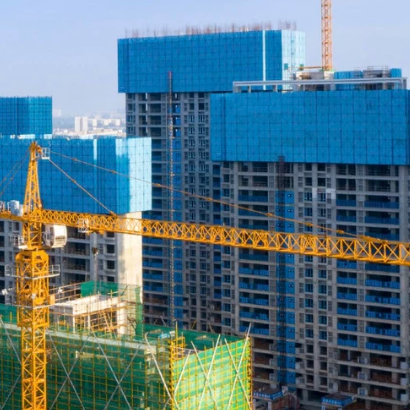
As cities grow in population and importance, urban construction will continue to gather pace. It is estimated that global floor area is expected to double by 2060, the equivalent of adding New York City every month for the next 40 years. This white paper highlights case studies and nine innovative solutions that provide models for cities seeking to meet sustainable development goals.
Engineering & Construction, Nature & Natural capital
Reducing Embodied Carbon in Cities: Nine Solutions for Greener Buildings and Communities
This playbook supports the adoption of the G20 Global Smart Cities Alliance’s Whole Life Carbon Assessment (WLCA) model policy by identifying the contextual nuances and providing guidance to overcome challenges and implement the policy.
Adoption Playbook for Whole Life Carbon Assessment Mandates
The urban affordability crisis is widespread and multifaceted, highlighting systemic injustice and deepening inequities for the 56% of the global population that calls cities home today. 
Reshaping affordability: interventions for inclusive and livable cities
Geneva and San Francisco: A tale of 2 cities and their innovation journey
How Cities Adapt and Evolve
This guide explains how to prepare a whole life carbon assessment (WLCA) in alignment with the model policy created by the Taskforce on Sustainability and Smart Cities. It is framed to be used by practitioners who must comply with the policy.The guide explains what goes into submitting and complying with a WLCA. To stay impartial, the guide does not go into any one specific WLCA framework, but highlights what is needed to create a successful assessment.
Practitioners’ Guide to Whole Life Carbon Assessments
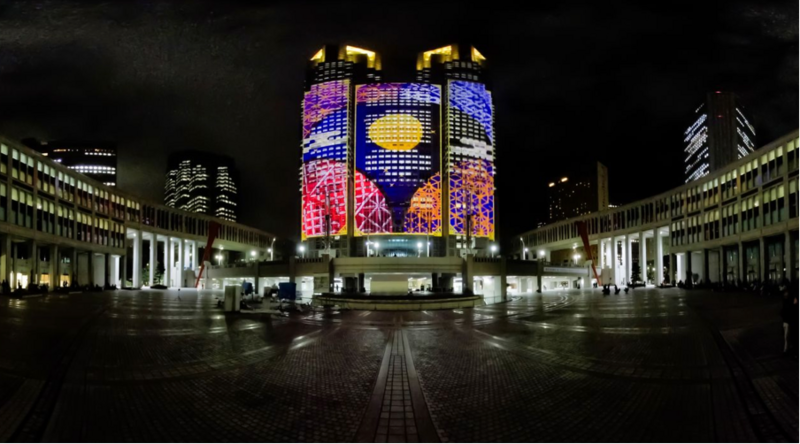
Tokyo’s nighttime environment has been enhanced through large-scale projection mapping and vibrant lighting displays designed to boost nighttime tourism and enliven public spaces after dark. Key initiatives include the Tokyo Night & Light projection on the Tokyo Metropolitan Government Office building—the largest of its kind globally—and seasonal illuminations along Roppongi Hills, Marunouchi’s Nakadōri, and Shibuya’s Blue Grotto. Iconic landmarks such as Tokyo Tower and Tokyo Skytree feature dynamic, culturally significant lighting schemes year-round, combining aesthetics with efforts to minimize light pollution. Despite a pandemic-induced decline in overall nighttime brightness and fewer neon signs, these lighting innovations help transform Tokyo’s nightscape, making it a memorable destination for residents and visitors alike. The use of advanced lighting technology not only brightens the city but also supports the nighttime economy by attracting crowds and encouraging after-dark activity
Japan
Illuminating Tokyo: Enhancing Nightlife and Cultural Experience through Projection Mapping and Lighting Displays

Data After Dark is a platform to support a vibrant, safe, and diverse Sydney nightlife. It aims to provide local and state government with a thorough, consistent and shared understanding of Sydney's 24-hour economy to further enhance Sydney’s standing as a global nightlife destination.
Australia
Data After Dark
NSW Office of the 24-Hour Commissioner
Camden Night StrategyType of a Document A: StrategyLocal Authority: CamdenCommissioned by: Camden
United Kingdom
Camden Night Strategy
Dublin City Council established a “Telecoms Unit” in April 2022 to centralize and consolidate functions relevant to telecommunications and digital infrastructure into a dedicated unit within the City Council. The unit is a one-stop-shop for all telecoms related activities, providing a single point of contact for citizens, industry and other public bodies to engage with. It is responsible for developing and executing Dublin City Council’s telecoms strategy and supporting the rollout of digital infrastructure. 
Ireland | Government, Technology, IT and Communications (ICT)
Dublin Telecoms Unit Case Study
Although the concept of “smart cities” has existed for nearly two decades, many cities that aspire to be smart still lack the basic governance and policies needed to ensure that technology is adopted in a responsible and ethical way. This is even the case for members of the G20 Global Smart Cities Alliance that are seen as pioneers of the process. 
Government, Technology
Governing Smart Cities: Use Cases for Urban Transformation
Cities can facilitate network deployment by making their assets and land available to network providers – and foster true public-private partnerships. Both cities and network providers can benefit from the use of local authority assets in this way. Simplifying the interactions between cities and the telecommunications industry promises to significantly accelerate the expansion of existing wireless networks and connectivity and, by extension, support local economic growth and digital inclusion in cities across the world.This is a wide-ranging policy, reflecting the importance and scale of improving urban digital infrastructure – and the multiplier effect that positive urbanization has on a number of other areas, including rural-urban linkages. It includes asset and portfolio management, budgetary aspects and shaping collaborative public-private partnerships. However, the policy reaffirms the strong position of cities: with assets and infrastructure made available to drive meaningful improvements in connectivity. Depending on local context, some cities may be able to explore all aspects of the policy in their entirety – while others may require collaboration with the national government or other stakeholders.
Technology, IT and Communications (ICT)
Public Sector Asset Use Model Policy
The objective of this model policy is to help cities draft legislation requiring WLC assessments for major developments in the built environment. While there  are a variety of interpretations of the term “major development” and as much variety in the criteria to define them, major development is defined here as any work that requires planning approval. This includes retrofits, renovation, refurbishment and new construction.Cities adopting this policy model would take a decisive step to reduce the carbon footprint of their built environment and reach their climate-neutrality and net-zero emissions targets. By adopting this policy, cities would also meet some of the leadership commitments of the C40 Cities Accelerators: Net Zero Buildings Accelerator and Clean Construction Accelerator.
Engineering & Construction, Materials
Whole Life Carbon Assessment Mandates Model Policy

Access our benchmarking tools

Have a solution you would like for us to feature?

Email us with information about your suggested solution.